
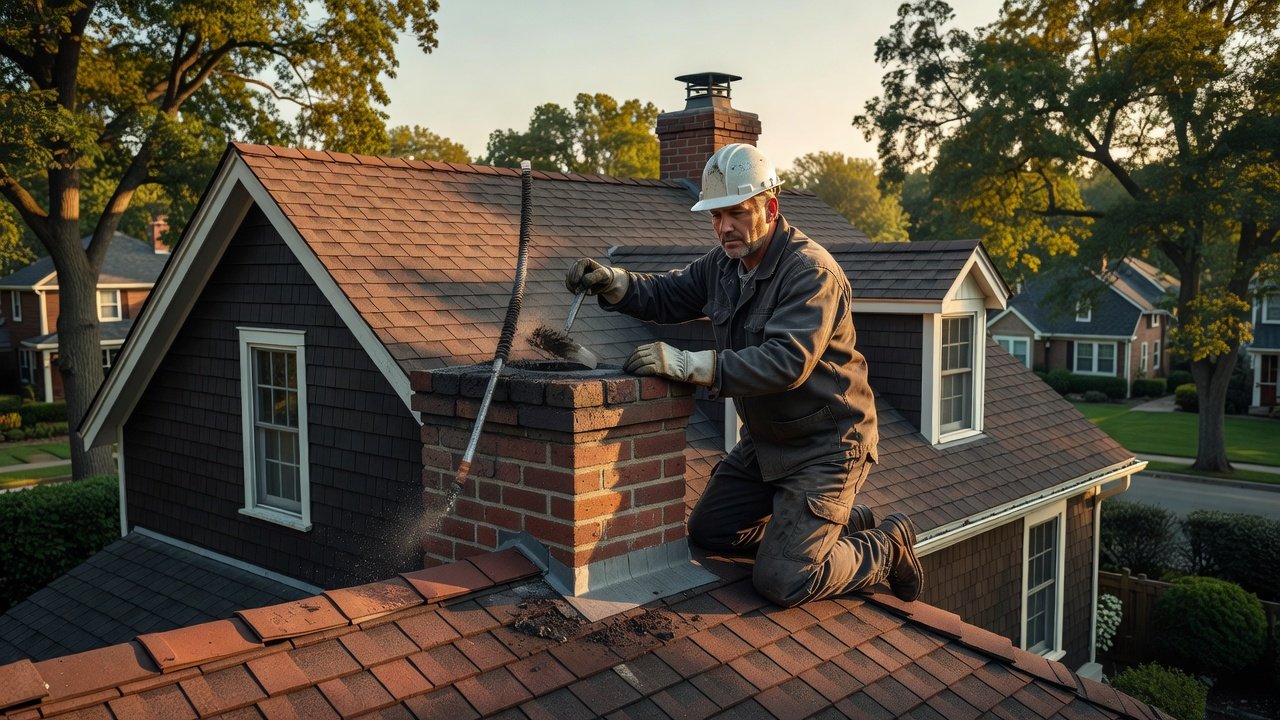
When to Schedule a Chimney Sweep in Roslyn and East Hills and the Mistakes That Cost Homeowners the Most
Most chimney fires don’t happen because homeowners are careless.
They happen because maintenance was delayed by just one season.
In East Hills and Roslyn, where many Colonial and split-level homes still have original masonry fireplaces, waiting one extra year can allow creosote to build from manageable levels to a serious fire hazard.
This guide explains the best time to schedule a chimney sweep in Nassau County, what to expect during each season, and the common scheduling mistakes that end up costing homeowners the most.
Why Timing Matters More on Long Island
Long Island’s climate puts significant stress on chimney systems throughout the year.
East Hills experiences sustained cold weather from late November through early March, meaning fireplaces and wood stoves often operate continuously for four to five months.
After winter, spring moisture and summer humidity accelerate masonry deterioration, rust metal components, and create ideal conditions for chimney damage if maintenance is delayed.
According to NFPA 211, chimneys serving solid-fuel appliances should be inspected at least once each year.
The Chimney Safety Institute of America (CSIA) also recommends cleaning whenever measurable creosote has accumulated, regardless of how many fires have been burned.
In Roslyn and East Hills, annual chimney service should be viewed as the minimum—not the maximum.
A Season-by-Season Guide
Late Summer (August Through Mid-September): The Best Time to Schedule
Late summer is the ideal time to schedule a chimney sweep, yet it’s the window many homeowners overlook.
Appointment availability is typically better before the busy season begins, allowing technicians more flexibility for inspections and repairs.
Any masonry damage caused by winter’s freeze-thaw cycles has had time to dry, making repairs easier to complete before colder weather returns.
If chimney liner repairs are necessary, they can usually be completed without weather-related delays.
One common mistake during this time is assuming the chimney is fine because it hasn’t been used for several months.
In reality, birds, squirrels, raccoons, and other wildlife frequently occupy chimneys during the warmer months.
It’s also important to remember that chimney swifts are federally protected, meaning active nests generally cannot be removed until the birds have migrated.
A late-summer inspection identifies these issues before the first fire of the season.
Fall (Mid-September Through October): Still a Good Time, but Appointments Fill Quickly
Fall is when most Roslyn-area homeowners begin scheduling chimney maintenance.
As demand increases, appointment availability becomes more limited.
By mid-October, many chimney companies are scheduling several weeks in advance, and appointments often extend into November.
The most common mistake is waiting until the first cold weather arrives before calling.
By the time overnight temperatures consistently reach the 40s, reputable chimney companies throughout Nassau County are often booked two to three weeks ahead.
Scheduling in September helps avoid unnecessary delays.
November and December: Better Than Nothing, but Not Ideal
Scheduling chimney service in November is still worthwhile, but it’s no longer the preferred timing.
Some homeowners decide to use their fireplace while waiting for an appointment, assuming they’ll have the chimney cleaned afterward.
According to NFPA fire data, residential chimney fires occur most frequently between December and February, making delayed maintenance especially risky.
If you schedule late in the season, tell your technician how frequently you used the fireplace the previous winter.
Homes burning several cords of wood each season often accumulate heavier creosote deposits that may require more than a standard chimney sweeping.
Winter (January Through March): Primarily Emergency Service
Most winter chimney appointments involve existing problems rather than preventive maintenance.
Typical calls include:
- Smoke entering the home
- Persistent chimney odors
- Cracked chimney liners
- Draft problems
- Water leaks
Winter is the most difficult time to discover major chimney issues.
Cold temperatures limit masonry repair options because mortar cannot cure properly, and many repairs must be postponed until warmer weather.
A common mistake is hoping the problem will improve on its own.
Creosote doesn’t disappear.
Cracked flue liners don’t repair themselves.
Waiting until spring often turns a relatively minor repair into a much larger project.
Spring (April Through June): The Best Time for a Post-Season Inspection
After months of regular fireplace use, spring provides an excellent opportunity to evaluate the chimney before summer humidity arrives.
Removing accumulated creosote before warm weather helps prevent the unpleasant sulfur-like odors that often develop when creosote absorbs moisture.
Spring inspections also identify:
- Spalling brick
- Chimney crown deterioration
- Flashing damage
- Mortar deterioration
Many homeowners mistakenly view a spring inspection as optional.
In reality, addressing winter damage early allows repairs to be completed before they become significantly more expensive.
What a Professional Chimney Sweep Includes
A professional chimney sweep in East Hills should include a thorough inspection of the entire chimney system.
Technicians typically evaluate:
- The flue liner
- The firebox
- The damper
- The smoke chamber
- The chimney crown
- The chimney cap
- Exterior masonry
Creosote and debris are removed using specialized rotary brushes and high-powered vacuum systems.
For chimneys operating under normal conditions without recent changes, NFPA 211 considers a Level 1 inspection the appropriate minimum standard.
If you’ve changed heating appliances, experienced chimney performance issues, or purchased a new home, a Level 2 inspection with video documentation may be recommended.
A complete appointment generally requires 45 to 90 minutes for a single fireplace.
If a technician finishes in only 20 minutes, the chimney likely hasn’t received a thorough inspection and cleaning.
Typical Chimney Sweep Costs in East Hills and Roslyn
Homeowners throughout the Roslyn area can generally expect the following price ranges:
- Standard chimney sweeping with a Level 1 inspection: $175–$275
- Additional creosote removal for heavier buildup: $300 or more
- Minor chimney liner repairs: Starting around $500
- Complete stainless steel chimney liner installation: $2,500 or more, depending on chimney size and condition
These aren’t scare tactics they’re typical costs homeowners encounter when routine maintenance has been delayed.
Schedule Before You Need It
The homeowners who end up facing expensive chimney repairs usually aren’t the ones who ignored their chimneys forever.
They’re the ones who planned to schedule maintenance in September but didn’t get around to it until December.
With so many older masonry chimneys throughout East Hills and Roslyn, timely inspections and cleanings make a significant difference in both long-term safety and repair costs.
Ridgewood Chimney proudly provides professional chimney inspections and sweeping services throughout Nassau County, including East Hills, Roslyn, and surrounding communities.
Schedule your free chimney inspection today and reserve your appointment before the fall rush begins. The best time to schedule chimney maintenance is before you actually need it.
Areas we serve
Roslyn, NY · Flower Hill, NY · Albertson, NY · Garden City, NY · Great Neck, NY · Roslyn, NY · Roslyn, NY · Hempstead, NY · All areas →