
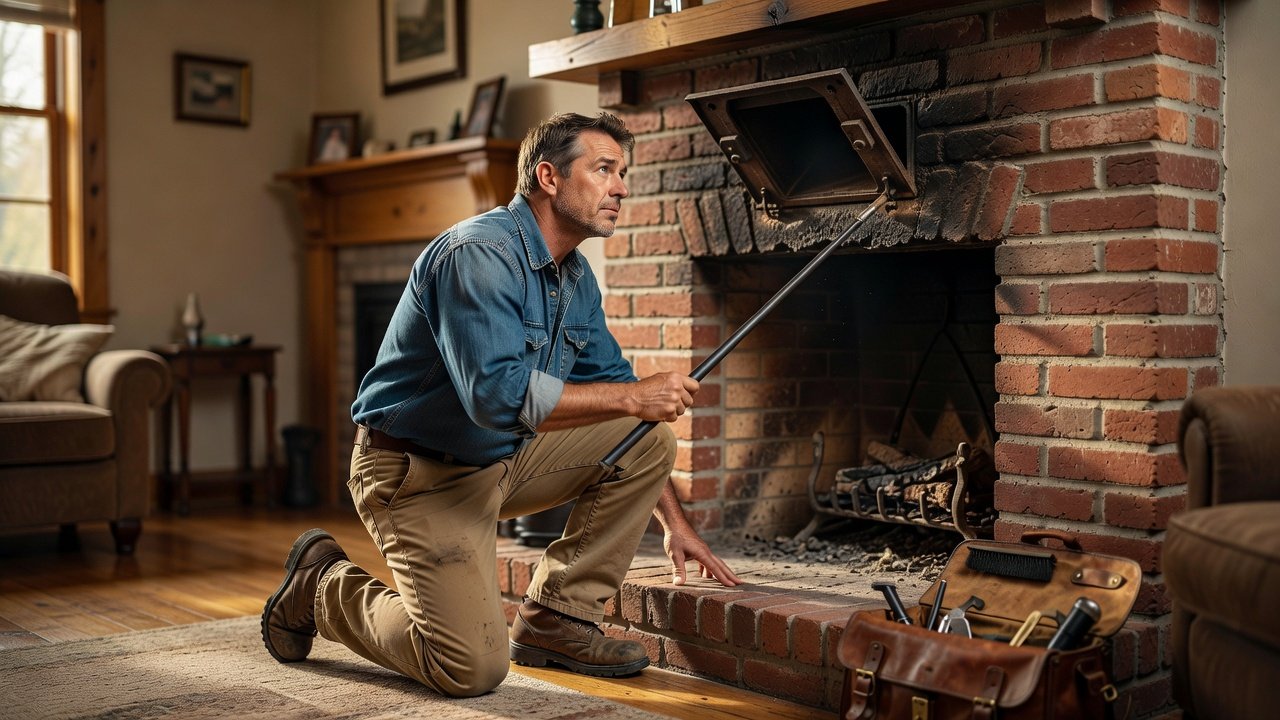
7 Warning Signs Your Chimney Damper Needs Repair Before It Becomes a Costly Problem
A properly functioning chimney damper is something most homeowners never think about. You open it before lighting a fire, close it when you’re finished, and it quietly does its job. However, when a damper begins to fail, the warning signs are often easy to overlook until they become expensive or even dangerous.
For homeowners in East Hills, Roslyn, Roslyn Heights, and throughout Nassau County, recognizing the early symptoms of damper problems can help prevent costly chimney repairs, improve energy efficiency, and protect your family from potential safety hazards.
What Does a Chimney Damper Do?
A chimney damper is a movable metal plate located inside the chimney or at the top of the flue. Its primary purpose is to control airflow.
When you’re using your fireplace, the damper opens to allow smoke, heat, and combustion gases to exit safely through the chimney. When the fireplace is not in use, the damper closes to:
- Prevent heated or cooled indoor air from escaping.
- Reduce drafts entering the home.
- Keep rain, moisture, debris, and animals out of the chimney.
- Improve overall energy efficiency.
According to the National Fire Protection Association, chimney systems should be inspected annually to ensure all components including the damper are operating properly.
7 Warning Signs Your Chimney Damper Needs Repair
1. Smoke Enters the Room When You Use the Fireplace
One of the clearest signs of a damper problem is smoke entering your living space.
A damaged, partially closed, or seized damper can restrict airflow, preventing smoke from drafting properly through the chimney.
If smoke consistently enters the room, discontinue fireplace use until the chimney has been professionally inspected.
2. You Feel Cold Air Coming Through the Fireplace
A properly closed damper should significantly reduce outside airflow.
If you notice cold drafts coming through the fireplace during the winter, the damper may no longer seal correctly, allowing outside air to enter your home and conditioned air to escape.
3. The Damper Is Difficult to Open or Close
Older throat dampers can become stiff due to rust, corrosion, or worn hardware.
If the handle feels stuck, requires excessive force, or no longer operates smoothly, the damper mechanism may need repair or replacement.
4. You Hear Whistling or Wind Noise
Whistling sounds during windy weather often indicate air is passing through gaps around a damaged or improperly sealed damper.
Although the fireplace may still appear functional, these openings can reduce energy efficiency and allow moisture into the chimney.
5. Animals or Debris Keep Appearing in the Fireplace
Leaves, twigs, nesting materials, or evidence of birds and small animals inside the fireplace may indicate the damper is no longer closing properly.
A damaged damper can leave an opening that allows wildlife and debris to enter the chimney.
6. Rust or Corrosion Is Visible
Rust is one of the earliest signs that moisture is affecting the chimney.
Visible corrosion, flaking metal, or deterioration around the damper may indicate that repair or replacement is needed before the damage becomes more extensive.
7. Unusual Odors Come From the Fireplace
Musty smells, damp odors, or noticeable outdoor air entering through the fireplace often indicate moisture intrusion or poor sealing around the damper.
Persistent odors should be evaluated during a professional chimney inspection.
When to Call a Professional Immediately
Some chimney damper issues require prompt attention.
Schedule an inspection if you experience:
- Smoke entering the home.
- A damper that will not fully open or close.
- Heavy rust or broken metal components.
- Evidence of animals inside the chimney.
- Strong drafts affecting indoor comfort.
- Water leaking into the fireplace.
These issues may affect both fireplace performance and household safety.
Typical Chimney Damper Repair Costs
Homeowners in East Hills and surrounding Nassau County communities can generally expect the following price ranges:
| Service | Typical Price Range |
|---|---|
| Minor throat damper repair | $150–$300 |
| Throat damper replacement | $250–$450 |
| Top-mount damper installation | $300–$500 |
Actual costs vary depending on accessibility, chimney condition, replacement parts, and whether additional masonry repairs are required.
Why Early Repairs Save Money
Many damper problems begin as relatively minor issues but become more expensive if ignored.
Prompt repairs can help prevent:
- Moisture damage.
- Rust and corrosion.
- Masonry deterioration.
- Increased heating and cooling costs.
- Wildlife entering the chimney.
- More extensive chimney repairs.
Addressing small problems early often extends the life of the entire chimney system.
Frequently Asked Questions
How often should a chimney damper be inspected?
The National Fire Protection Association recommends annual chimney inspections to verify that the damper and other chimney components are functioning properly.
Can a damaged chimney damper increase my energy bills?
Yes. A damper that does not seal properly allows conditioned indoor air to escape while letting outside air enter, making your heating and cooling systems work harder.
Should I repair or replace my chimney damper?
Minor mechanical issues can often be repaired. However, severely rusted, warped, or damaged dampers may require replacement. A professional inspection can determine the most cost-effective solution.
What’s the difference between a throat damper and a top-mount damper?
A throat damper is installed above the firebox inside the chimney, while a top-mount damper is installed at the top of the chimney and also functions as a chimney cap. Top-mount dampers generally provide a tighter seal and offer additional protection against rain and wildlife.
Schedule Your Free Chimney Inspection Today
If you’ve noticed drafts, smoke problems, unusual odors, or difficulty operating your chimney damper, a professional inspection can identify the cause before the problem becomes more expensive.
At Ridgewood Chimney, we provide professional chimney inspections, damper repairs, chimney sweeping, masonry repairs, cap installations, and fireplace maintenance with honest pricing and no hidden fees. Our experienced technicians will inspect your chimney, explain our findings clearly, and recommend only the repairs your system truly needs.
Contact Ridgewood Chimney today to schedule your free chimney inspection.
Our services
Exterior Chimney Repair · Chimney Liner for Furnaces · Concrete Chimney Crown Repair · Chimney Waterproofing · Chimney Masonry Repair · Chimney Services
Areas we serve
Garden City, NY · Great Neck, NY · Roslyn, NY · Roslyn, NY · Hempstead, NY · Freeport, NY · Levittown, NY · Babylon, NY · All areas →